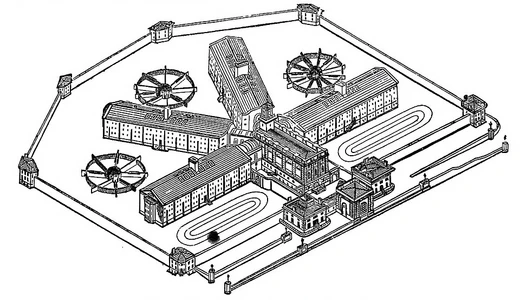
Punishment
Punishment is an imposed response to norm-breaking.
Punishment involves the imposition of an undesirable or unpleasant outcome on an individual or group in response to a violation of a norm or rule. This concept operates both within formal criminal justice systems and in everyday life, such as in child discipline or interpersonal relationships. The severity of punishment varies widely, encompassing sanctions like reprimands, removal of privileges, fines, incarceration, ostracism, social shunning, physical pain, amputation, and the death penalty. Corporal punishment specifically refers to measures intended to inflict physical pain on the transgressor. The fairness of a punishment is often judged by its reciprocity and proportionality to the offense. Punishment can also serve as a tool for socialization and behavioral modification, frequently paired with rewards in pedagogical systems.
Philosophical justifications for punishment have existed since ancient times, with thinkers like Aristotle exploring its ethical implications. Key theories argue that punishment deters wrongdoing, rehabilitates offenders, incapacitates dangerous individuals, or delivers deserved justice. In philosophy, punishment is commonly defined by conditions such as being imposed by an authority, involving loss to the offender, responding to an offense, and holding the offender at least somewhat responsible. However, some legal philosophers, like Theo Gavrielides, have proposed that punishment can be self-inflicted voluntarily, as in restorative justice, potentially leading to transformation and rehabilitation.
In psychology, punishment has a narrower definition under operant conditioning, introduced by B.F. Skinner. It is the reduction of a behavior through the application of an unpleasant stimulus (positive punishment) or the removal of a pleasant one (negative punishment). Importantly, the behavior must actually decrease for the action to qualify as punishment; otherwise, it is merely an aversive stimulus. In sociobiology, punishment is observed across social animal species as retaliatory or moralistic aggression, considered an evolutionarily stable strategy that can promote cooperation. Yet some research indicates costly punishment may not improve group payoffs and could have evolved for other purposes. Even insects, such as honey bees, exhibit punishing behaviors, suggesting that punishment does not require high intelligence.
- field
- Philosophy, Psychology, Sociology, Evolutionary Biology
- known_for
- Justification and definition of punishment across disciplines
- scope
- Criminal justice, child discipline, operant conditioning, social cooperation
Lore & Background
Punishment can differ in severity, including reprimands, privilege removal, deprivation of liberty, fines, incarceration, ostracism, infliction of pain, amputation, and the death penalty. Corporal punishment specifically intends to inflict physical pain. Punishments may be judged fair or unfair based on reciprocity and proportionality to the offense. Punishment can be integral to socialization and behavioral modification systems that also include rewards.
Reader's Guide
In philosophy, punishment is commonly defined as being imposed by an authority, involving loss to the offender, in response to an offense, with the offender deemed at least somewhat responsible. However, philosopher Theo Gavrielides developed a theory of self-inflicted punishment not imposed by an authority, arguing it can lead to transformation and rehabilitation. In psychology, B.F. Skinner defined punishment as the reduction of a behavior via an unpleasant stimulus (positive punishment) or removal of a pleasant stimulus (negative punishment); it is only considered punishment if the behavior decreases. In sociobiology, punishment is seen as retaliatory or moralistic aggression observed in social animals, possibly an evolutionarily stable strategy favoring cooperation, though some studies show costly punishment may not improve group payoff. Arguments against punishment requiring intelligence come from observations of honey bee workers killing fertile mutants, suggesting simple reactions can emulate complex behavior. Punishment is applied in families, schools, workplaces, militaries, and religious institutions, with justifications ranging from utilitarian perspectives to social contract theory and restorative justice.
Did You Know?
- Punishment can be self-inflicted in a voluntary and honest practice such as restorative justice, according to legal philosopher Theo Gavrielides.
- In psychology, punishment is only considered punishment if the offending behavior decreases; otherwise it is not punishment.
- Honey bee workers with mutations that make them fertile lay eggs only when not observed, and those caught are killed, suggesting punishment does not require intelligence.
- Punishment may be judged as fair or unfair based on its degree of reciprocity and proportionality to the offense.
Frequently Asked Questions
What is punishment in the context of crime & justice?
Punishment is the deliberate imposition of an unpleasant consequence on a person or group that has violated a rule or social norm. It functions as a targeted response rather than a random event, directed specifically at the norm-breaker.
Why do societies justify punishment?
Philosophical and legal frameworks typically defend punishment through four lenses: deterring future wrongdoing, rehabilitating the offender, incapacitating dangerous individuals, and delivering retributive justice. These justifications can operate simultaneously within a single sentencing decision.
Does punishment only apply in criminal courts?
No. The concept extends well beyond the courtroom into child-rearing discipline, interpersonal relationship dynamics, and operant-conditioning experiments. In each setting it serves the same core function of signaling that a shared norm has been breached.
Which academic fields study punishment?
Punishment sits at the intersection of philosophy, psychology, sociology, and evolutionary biology. Each discipline approaches it from a distinct angle—moral justification, behavioral conditioning, social structure, and survival strategy, respectively.
How does punishment connect to social cooperation?
By imposing costs on norm-violators, punishment helps sustain the cooperative frameworks that groups depend on. Without some form of enforced consequence, the incentives to follow shared rules weaken and collective coordination breaks down.
More in Crime & Justice 1-24
Spotted an error? Know more?
This is a living reference — every entry is fact-audited, and reader corrections feed straight into our audit queue. Suggest an edit · See this site's audit record