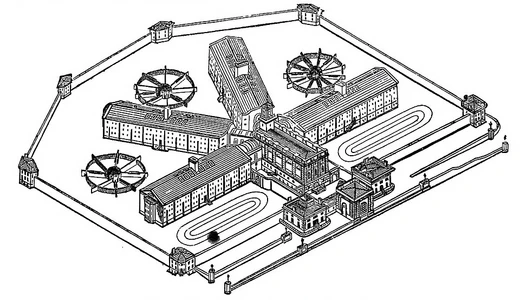
Rehabilitation (penology)
Rehabilitation aims to prevent recidivism by addressing root causes of crime.

Rehabilitation in penology is the process of re-educating criminal offenders and preparing them to re-enter society, with the goal of addressing the underlying root causes of crime to prevent recidivism. It generally involves psychological approaches targeting cognitive distortions, as well as general education like reading skills and career training.
- field
- Penology
- known_for
- Re-educating offenders to prevent recidivism
- methods
- Psychological approaches, education, career training, chemical treatment, longer sentences
Lore & Background
Rehabilitation programs vary by region. Norway's prison system, based on normalization, provides amenities such as mini fridges, flat-screen TVs, private bathrooms, and access to outdoor environments, along with shared kitchens and living areas to create a sense of family. Halden fengsel, called the 'world's most humane maximum-security prison,' aids inmates in sorting out housing and employment before release. Rehabilitative measures include education, job training, workshops, therapy, and humane treatment from personnel who complete three years of training. In India, Vipassanā 10-day meditation courses were first taught in prisons in 1975, aiming to reduce negative mental states such as anger and aggression. The European Court of Human Rights has stated that while punishment remains an aim, the emphasis in European penal policy is on rehabilitation, particularly toward the end of long sentences. The United States Code states that imprisonment is not an appropriate means of promoting correction and rehabilitation, and the proportion of correctional spending allocated to prevention and treatment varies by year and source, with no single authoritative figure.
Reader's Guide
Rehabilitation in penology represents a shift from purely punitive approaches to addressing the causes of criminal behavior. Its significance lies in its potential to reduce recidivism, as seen in Norway's low reimprisonment rate of 18% after 2 years. However, the approach faces criticism: it can authorize lengthy restrictions of liberty and broad governmental power over offenders' personalities, and due process concerns arise from a lack of traditional safeguards. Some programs, such as drug courts, have been criticized for widening the net of penal control. Additionally, psychopathy is highly correlated with recidivism, and traditional therapeutic approaches may make psychopaths more adept at manipulating others. Despite these challenges, rehabilitation remains a central goal in many penal systems, with evidence that education and drug treatment programs can reduce recidivism when properly implemented.
Did You Know?
- Norway's Halden fengsel is referred to as the 'world's most humane maximum-security prison'.
- Vipassanā meditation courses were first taught in prisons in India in 1975.
- The percentage of U.S. correctional spending that goes to prevention and treatment varies by year and source, and is not consistently reported as a single figure.
- Research suggests that prisoners with psychopathic traits may have different recidivism patterns, though the exact probability of release compared to undiagnosed individuals is not a universally established statistic.
Frequently Asked Questions
What is Rehabilitation (penology) in the Crime & Justice series?
Rehabilitation is the penological approach focused on re-educating criminal offenders so they can successfully re-enter society. Rather than simply punishing, it targets the deeper root causes behind a person's criminal behavior to reduce the chance they offend again.
What methods does Rehabilitation (penology) use?
The canon lists a mix of psychological interventions aimed at correcting cognitive distortions, general education such as literacy and career training, chemical treatment, and in some cases longer sentences designed to give the offender more time to change.
What is the primary goal of Rehabilitation (penology)?
Its central aim is to prevent recidivism by addressing the underlying causes of crime rather than merely imposing a penalty. In short, it tries to reshape the offender's thinking and skills so a return to criminal behavior becomes far less likely.
How does Rehabilitation (penology) differ from a purely punitive model?
While punishment focuses on retribution and deterrence, rehabilitation treats the offender as someone who can be re-educated and reintegrated. It emphasizes education, psychological work, and practical training instead of relying solely on incarceration as a deterrent.
Why is Rehabilitation (penology) important in the Crime & Justice 1-24 arc?
It serves as the thematic backbone of the episode, presenting a concrete alternative to the 'lock them up and throw away the key' mindset. By showing how targeted re-education can break the cycle of reoffending, it highlights a more humane and effective path toward public safety.
More in Crime & Justice 1-24
Elsewhere in the Crime & Justice universe
Spotted an error? Know more?
This is a living reference — every entry is fact-audited, and reader corrections feed straight into our audit queue. Suggest an edit · See this site's audit record